
ddress from Hans Dietrich Genscher
A life for freedom
In order to be able to understand Dr. Rainer Hildebrandt and his work, it is worth looking back on the nineteenth century, to his parents and grandparents, and then following the course of his life year by year. The pioneering spirit of his parents, art historian Dr. Hans Hildebrandt and painter Lily Hildebrandt, shaped Dr. Rainer Hildebrandt. The political work with his lifelong friend Dr. Albrecht Haushofer, the anti-Hitler resistance fighter who was murdered in the final days of the National Socialist terror machine, paved Dr. Rainer Hildebrandt’s path after the end of World War II.
Through his friendship with the family of Theodor Heuss he got acquainted with the values of the Free Democratic Party of Germany and became a member.
In the face of increasing political persecution in the Soviet occupation zone after World War II, Dr. Rainer Hildebrandt founded the Kampfgruppe gegen Unmenschlichkeit in West Berlin, and thus a search service for undeclared missing persons in the Soviet NKVD camps. In the late ’50s the German Red Cross received around 900,000 names of these people.
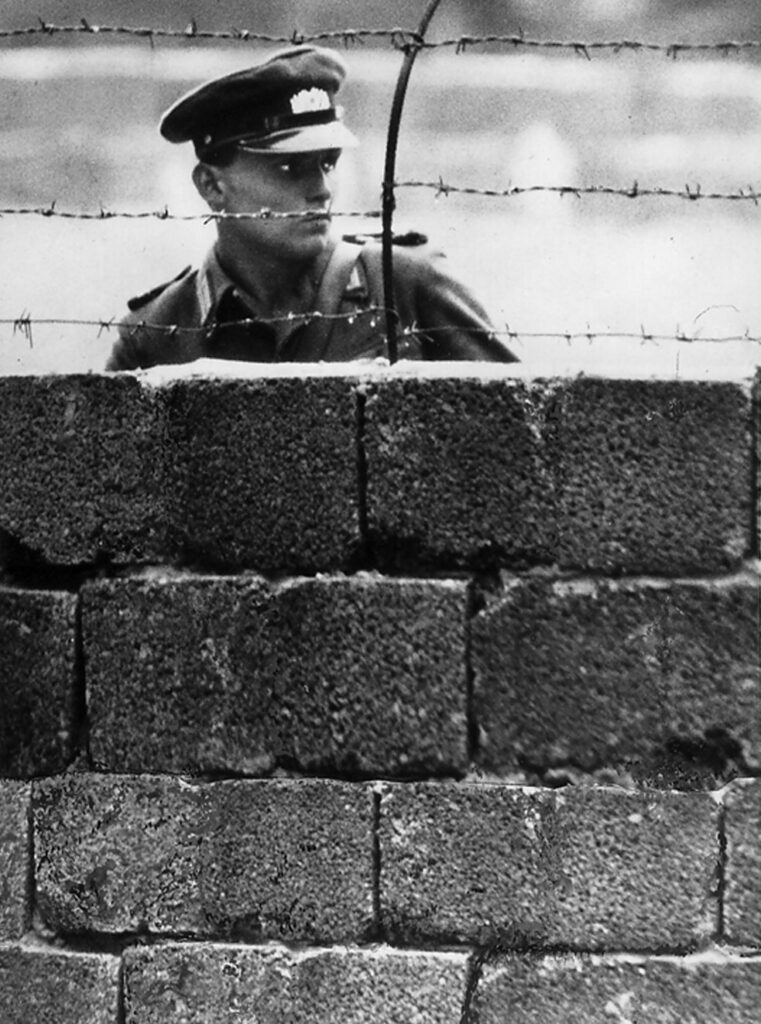
Dr. Rainer Hildebrandt spent his life drawing attention to the fates of persecuted people: those who, with their desire for freedom and justice, revolted against oppression in the Soviet occupation zone and the eventual GDR, who dared to flee from the GDR with the mortal risks that this entailed, who asserted opposition in the GDR itself and exposed themselves to persecution.
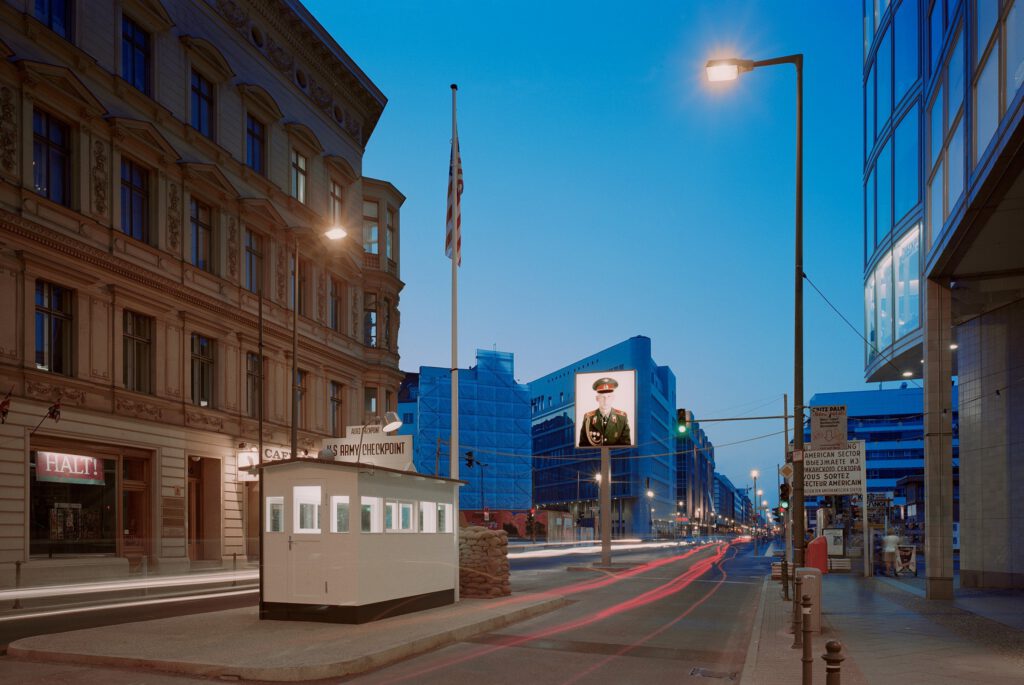
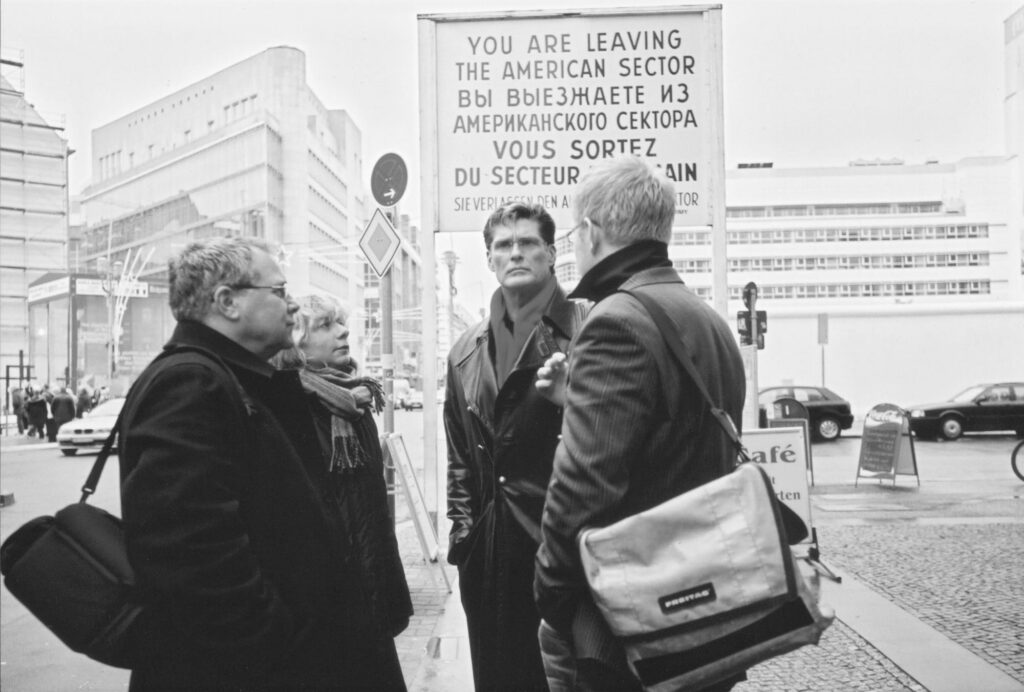
Dr. Rainer Hildebrandt founded the Mauermuseum – Museum Haus am Checkpoint Charlie in 1962. It is located at the former border crossing Checkpoint Charlie and documents the fates of many people associated with the escape from East Germany to the West. It also shows the global non-violent fight for human rights.
The life’s work of Dr. Rainer Hildebrandt is a constant reminder for all who enter of those who are subjected to persecution and the denial of human rights – the known and the unknown.

Biography of the founder of the Mauermuseum – Museum Haus am Checkpoint Charlie Dr. Rainer Hildebrandt
1914 Rainer Hildebrandt was born in Stuttgart, Germany on 14 December.
Father: Hans Hildebrandt, art historian at TU Stuttgart (first monographs about Alexander Archipenko and Oskar Schlemmer; lost professorship during NS era, as his mother was of Jewish background). Mother: Lily Hildebrandt, painter (master student under Adolf Hölzel; banned from painting during NS era due to non-Aryan background). Childhood andyouth in Stuttgart.
1934 A-levels
April to
August 1934: Fatigue duty
1934-1935 College internship training in the Fortuna-Werken, Bad Cannstatt.
1935-1936 Spring to autumn: working, sometimes independently, in the laboratory for applied physics at Robert Bosch AG, Stuttgart.
1936 First semester (summer semester) at the Technische Hochschule Stuttgart, studying physics.
Move to Berlin
1936-1938 August to February: Student employee at Telefunken.
1938 Starting in March, employed as an engineer at Telefunken. Worked independently, registering patents for Telefunken and multiple patents outside of his work area. Left of his own accord in September 1938.
1939-1940 Employed in the inventor division of Radio-Löwe AG Berlin.
Publications
since 1938: Numerous articles about electroacoustics in the scientific papers Funktechnische Monatshefte, Funk, Funkschau.
1937-1939 Studied physics at the Technische Hochschule Charlottenburg, then at the Universität Berlin.
since 1939 Expanded university studies to include philosophy, psychology, political science, political economics. Acquainted with Albrecht Haushofer.
1942 Promotion at Friedrich-Wilhelm-Universität Berlin in occupational psychology with Prof. Rupp and Eduard Spranger, minors in philosophy and physics; student and friend of Albrecht Haushofer, also working as his postman, friendship with Horst Heilmann, loyal assistant to Harro Schulze-Boysen; meeting between Haushofer and Schulze-Boysen in Rainer Hildebrandt’s flat.
Preliminary work for a new, larger publication in the field of political science.
Summer: Drafted into the Wehrmacht, training in Schneidemühl.
As of late summer 1942, worked at an intelligence interpreting division in Meißen.
1943 January: Relocated back to Schneidemühl, in February deserted the troop following a denunciation, arrested.
1944 Arrested for the second time, again due to „subversion of the armed forces“ (total 17 months).
After end of the War, worked as a publicist, first concerning Walther Rathenau; published Albrecht Haushofer’s Moabiter Sonette in 1946, in 1948 first book publication Wir sind die Letzten. Aus dem Leben des Widerstandskämpfers Albrecht Haushofer und seiner Freunde.
1948 Founded the „Kampfgruppe gegen Unmenschlichkeit“ (KgU), an organisation that formed a search service for missing prisoners, spread information about NKVD and GDR imprisonment, and also resisted the regime in the Soviet occupation zone / GDR.
1951 Five-month trip with 40 presentations in the USA, in particular about imprisonment, justice and resistance in the GDR.
1952 Departure from KgU, after which it performed acts of sabotage under Ernst Tillich’s leadership. Founding of the „Freiheitsbund für Deutsch-Russischer Freundschaft“, honorary chairman Ernst Reuter, co-chair Alexander Truschnowitsch, who was violently kidnapped and murdered.
Until 1961 Mainly worked in publishing, book publications Als die Fesseln fielen(uprising from „17 June“), published in the USA asThe Explosionand in Italian. Numerous articles, including in Les temps modernes, as well as continuous (1948 to 1995) articles about human rights and especially the GDR in Tagesspiegel. Editor-in-chief of the paper for the Deutsche Liga für Menschenrechte. Research projects for the Federal Ministry of Intra-German Relations.
1961 December: First press conference with refugees from the GDR.
19 October 1962 Opened the exhibit „It Happened at the Wall“ on Bernauer Straße, organised with assistance from former GDR prisoners, refugees and students.
June 1963 Registration of the registered society „Arbeitsgemeinschaft 13. August“, whereupon he was executive director of the society.
14 June 1963 Opened the Mauermuseum – Museum Haus am Checkpoint Charlie, whereupon he was its director.
1971 Integration of the exhibit at Bernauer Straße into the Haus am Checkpoint Charlie.
1973 Opened the exhibit section „Painters Interpret THE WALL“.
1976 Opened the exhibit section „BERLIN – From Frontline to the Bridge of Europe“.
1984 Opened the exhibit section „FROM GANDHI TO WALESA – Non-violent Fight for Human Rights“.
1987 Inauguration of the building expansion Friedrichstraße 43 (ground floor and first floor).
1989 98 performances of the self-written play R wie Rosa(aiding an escape with a US uniform).
1990-1995 Conception and organisation of the travelling exhibit „End of the Berlin Wall – Beginning of the New Europa“ through Eastern Europe and Israel.
1991-1994 Conception and organisation of the travelling exhibit „BREAKTHROUGH – The Fight for Freedom at the Berlin Wall“ through the USA, together with the Deutsches Historisches Museum.
1991 Initiation and beginning of perpetrator-victim discussions between former prisoners and members of the Stasi.
1999 Inauguration of the building expansion Friedrichstraße 45 (second floor).
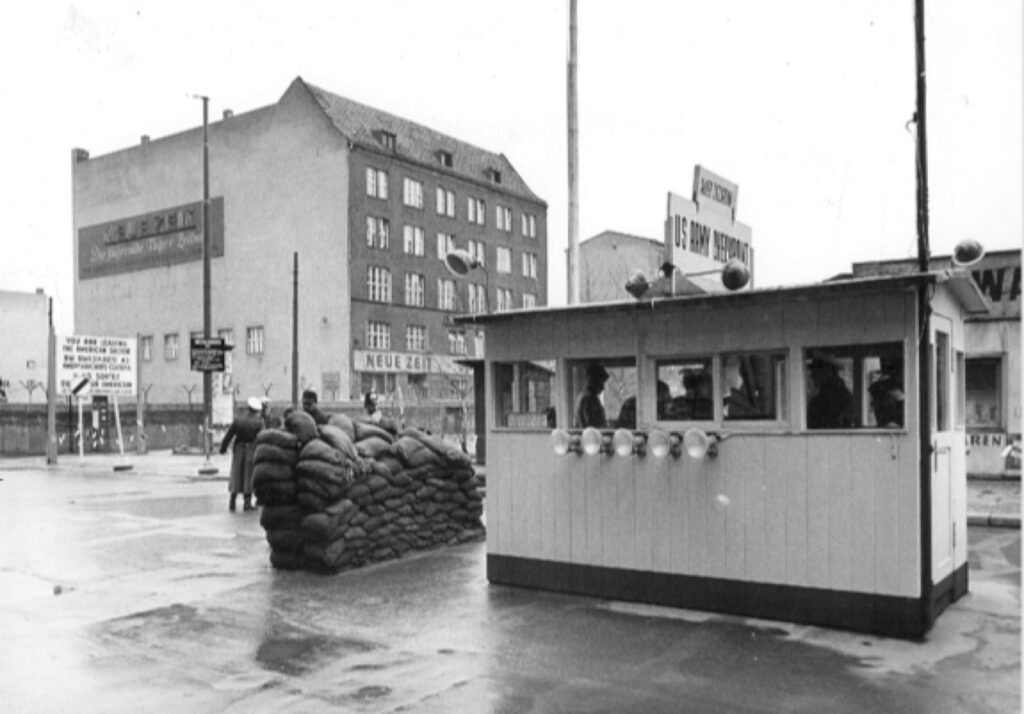
2000 August Inauguration of the faithful reconstruction of the first Allied control barracks on Friedrichstraße.
9 January 2004 Rainer Hildebrandt dies at the age of 89.
Awards received by Dr. Rainer Hildebrandt
1992 Order of Merit of the State of Berlin (Verdienstorden des Landes Berlin)
1994 Order of Merit of the Federal Republic of Germany (Bundesverdienstkreuz)
1998 Imre Nagy badge (lmre-Nagy-Plakette)