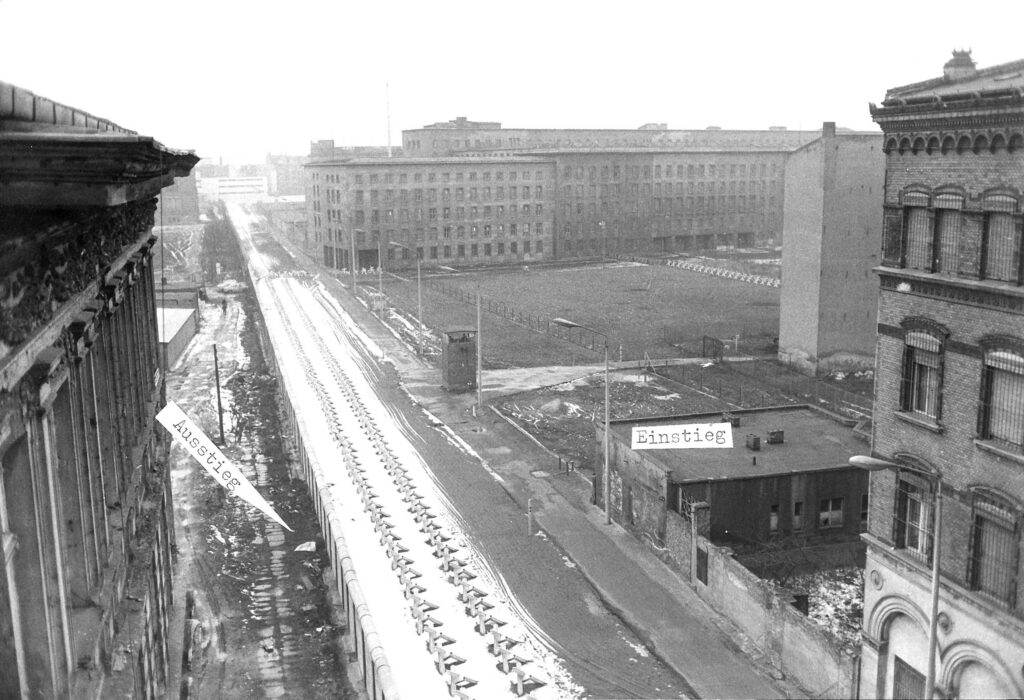

Escape stories
The courage to escape
In early November 1964 I was asked if I would help a young man get to West Berlin from the GDR. Sigfried was the name of the aspiring escapee who had been caught during his first escape attempt, was imprisoned, and now had to perform forced labour in a mine.
A colleague who knew that I come from West Germany and was allowed to travel to East Germany with my West German ID (when West Berliners were authorised to do so) asked if I could muster up the courage.
I agreed when I knew how the escape could work…
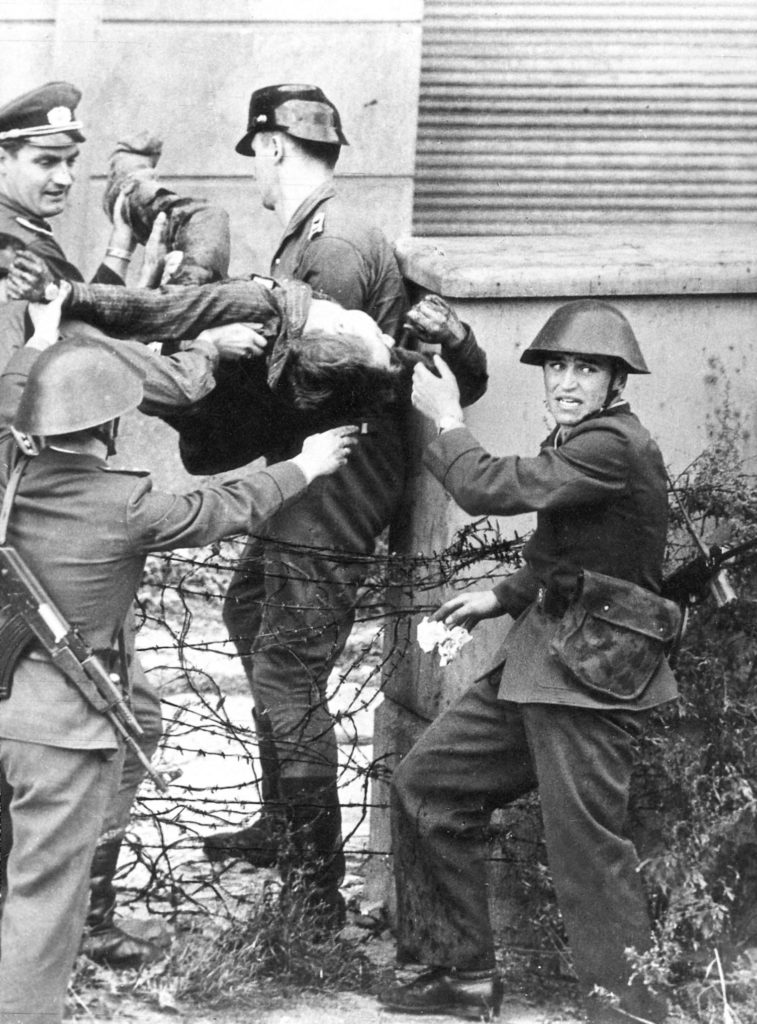
Peter Fechter
The death of 18-year-old refugee Peter Fechter on 17 August 1962, as he was struck by a bullet at the last border obstacle, shook the world. Frantic groups and protesters had gathered on this side of the Wall by the time the salvage party had finally arrived 50 minutes later. Police officers hazarded to climb onto the Wall and toss bandages to the young man bleeding atop the Wall. That night, and over the following two years, the Wall had to be guarded by West Berlin police every 13 and 17 August. The afternoon demonstration marches that came from all over West Berlin, shouting „The Wall must go!“ through their loudspeakers, were heading for Checkpoint Charlie. At Kochstraße the street had to be barricaded by staggered police ranks.

6 escapes
Harold E. Schwartz – born 1937, son of an American diplomat, military education in the intelligence service. Stationed in West Berlin from 1961 to 1964.
From September to November 1964 Harold Schwartz worked with 4 other soldiers as an escape accomplice. They were able to bring 7 refugees (students at Humboldt University) to West Berlin in the boot of a vehicle in 6 trips via Checkpoint Charlie. When they were caught in December 1964, Harold Schwartz was tried by a military court and ordered to leave West Berlin immediately.
The Austrian
„I’m Austrian,“ said a man at the border checkpoint, out of breath. „I just received a telegram, my mother is on her deathbed in West Berlin.“ „I forgot my passport, what should I do?“ The officer brought a colleague over and then went to the control booth to enquire. The „Austrian“ now told the new officer and guard, „I received the telegram. My dying mother is in East Berlin and I’ve forgotten my passport. Do you think I can be let through without a passport?“ „Probably not,“ said the officer. „I live really close by, so I would just like to go back and get my passport,“ he said, and was now in West Berlin.

Tunnel
One of the successful escapes was that of three youths, all younger than 20. One worked at an electrical company’s facility on the border, just 50 metres from the crossing. The spaces created for the Wall were sealed, but the key to the doors was in the porter’s lodge. With a hammer, shovel and knife they constructed a tunnel between Christmas and New Year’s 1971/72 and kept a logbook…